
Medicaid Whistleblowers and the Profits of Private Health Boards
JESSICA S
In recent weeks, multiple whistleblowers from states like Minnesota and Maine have come forward, revealing concerning instances of Medicaid fraud. According to recent local reports, these whistleblowers have highlighted how millions of tax dollars, intended for Medicaid recipients, may have been misappropriated by certain private companies.
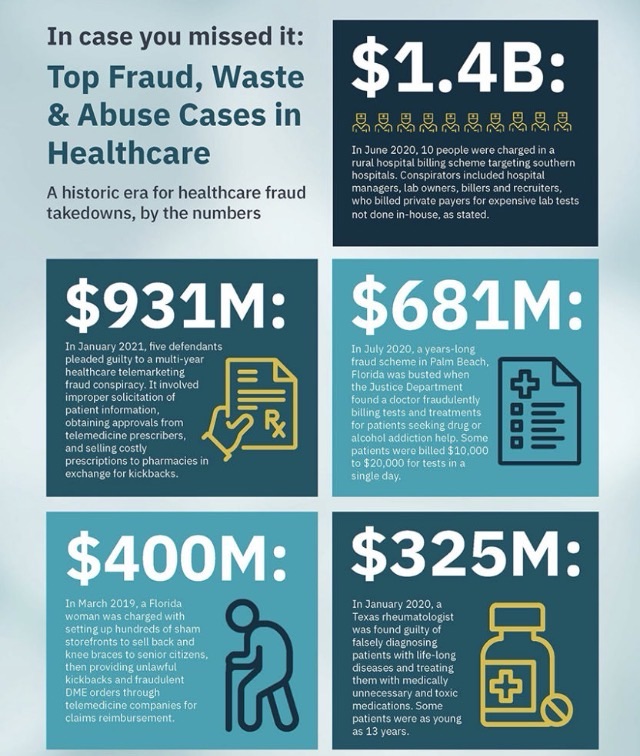
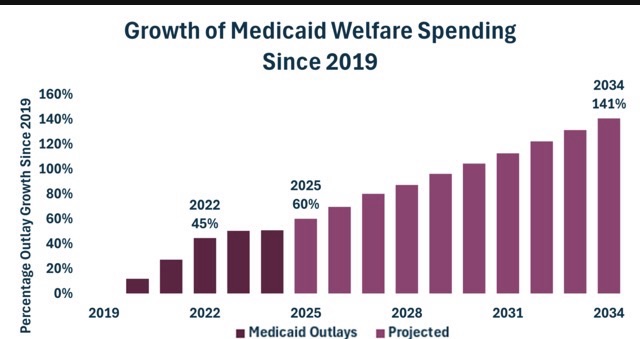
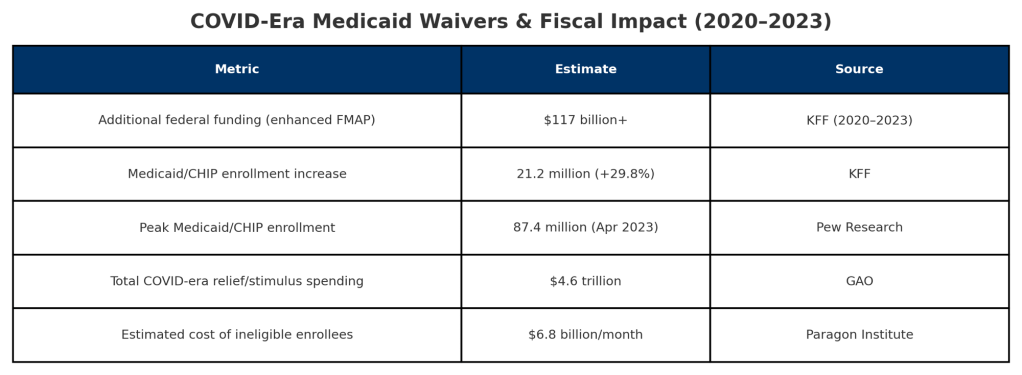
Medicaid fraud across the country cost taxpayers billions and billions of dollars each year. And we can see a year to year. increase.
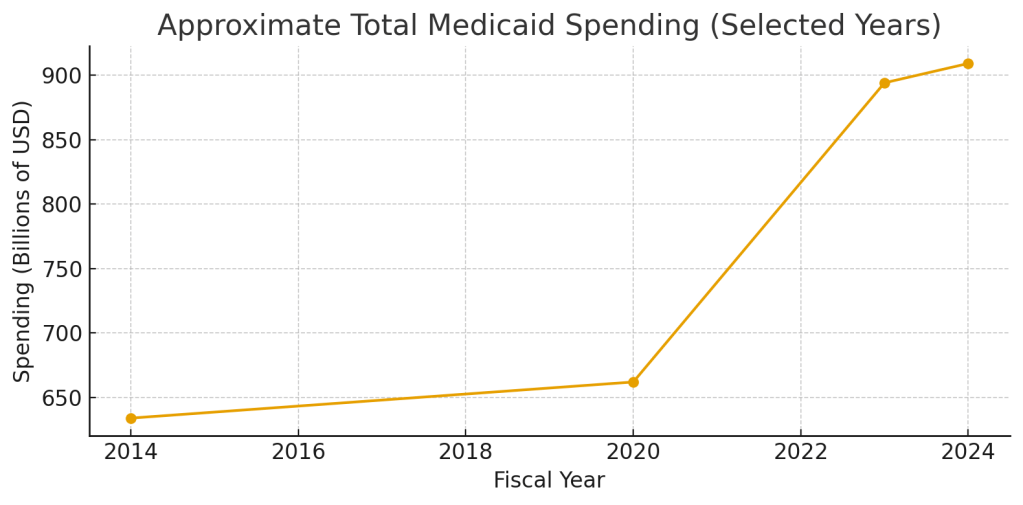
The taxpayer overall price tag for Medicaid (including fraud by providers and users) climbed by roughly a quarter-trillion dollars in about a decade:
• 2014: ≈ $630B
• 2020: $662B+
• 2022: ≈ high $800Bs
• 2023: $894B
• 2024: $909B
Across the U.S., it’s estimated that billions of taxpayer dollars flow from Medicaid into private insurers each year, raising important questions about oversight and accountability.
MCOs (Managed Care Organizations) are private companies that contract with the state to provide healthcare services to Medicaid beneficiaries.
One significant aspect of this issue is the role of political figures’ relatives, and people from the government sitting on the boards of these private health companies. For example, Chelsea Clinton served on the board of Clover Health from early 2017 to late 2025.
During her tenure, her total compensation, including stock options and bonuses, reportedly reached into the multi-million-dollar range, with estimates of her net worth ranging from $30 million to $70 million according to Clover Health board compensation reports, 2024.
It’s also important to note that the CEO of Clover Health, like many healthcare executives, has also earned substantial compensation. In some years, this has amounted to well over $10 million, underscoring the significant profits that can be involved in these arrangements.

Another board member, Demetrios Kouzoukas, has quite a notable background. Before he joined the Clover Health board in 2021, he was deeply involved in government healthcare roles. He served as the Director of the Center for Medicare and Principal Deputy Administrator at the Centers for Medicare & Medicaid Services from 2017 to 2021. Before that, he held a senior executive role at UnitedHealthcare, focusing on legal and regulatory affairs, and earlier in his career, he worked at the U.S. Department of Health and Human Services. So he definitely brought a lot of public-sector healthcare policy “experience” with him when he transitioned to the private sector.
Right now, Clover Health’s valuation is estimated to be around $1.3 billion.
In addition to Clover Health, several other large private companies are major players in the Medicaid landscape. As of 2024, the top private companies receiving Medicaid funds include: Centene Corporation, CVS Health, Elevance Health, Molina Healthcare, and UnitedHealth Group.
Collectively, these companies account for about half of the Medicaid managed care enrollment nationwide. Each of them operates Medicaid managed care organizations in numerous states, serving millions of beneficiaries and illustrating the extensive involvement of private firms in the Medicaid market.
This competitive field also includes various nonprofit organizations, ensuring a diverse range of Medicaid service providers . Source KFF and Reuters 2024.
2024 Annual Profits:
-UnitedHealth Group made about $23.14 billion
-Elevance Health around $6.03 billion
-Cigna about $3.43 billion
-CVS Health around $4.17 billion
-Molina Healthcare about $79 million
-Centene had a loss of about $6.6 billion that year.
For many Medicaid recipients, choosing a private company can offer several advantages. Private insurers often provide additional benefits that go beyond standard Medicaid coverage. These might include extra services like dental, vision, hearing, wellness programs, or enhanced care coordination.
Additionally, some private Medicaid plans offer more flexibility in choosing providers or access to a broader network of specialists. This can lead to a more personalized and convenient healthcare experience, which is particularly valuable for individuals with complex or chronic health needs.
Overall, these added benefits can make private Medicaid plans an appealing choice for many recipients [source: Medicaid.gov and KFF, 2024].
Lois Quam, who previously held leadership roles in public health initiatives, joined Relevance Health’s board and has an estimated net worth of approximately $5 million.
Michael Neidorff, who led Centene and was involved in public health advisory roles, has a net worth estimated at over $100 million.
These individuals illustrate how former regulators and public health leaders often move into influential private sector positions, shaping the intersection of public policy and corporate strategy [sources: OpenSecrets, KFF, Reuters, 2024].
While private Medicaid plans offer certain advantages, they are not without their criticisms. One of the most common complaints from Medicaid recipients is the limited network of providers. Some users find that they have fewer choices when it comes to doctors or specialists, and they may need to travel further for care.
They may use processes like prior authorization or medical necessity reviews to decide whether a certain treatment or service is covered. While this can help control costs and ensure that funds are used efficiently, it can sometimes lead to denials that feel frustrating for patients.
In other words, the drive to maintain a profit margin means that companies must balance providing care with keeping costs under control, and that can sometimes result in coverage decisions that not everyone agrees with [source: Medicaid.gov and KFF, 2024].
Is there an ethical concern if they can shape policy in the public sector?
Also… Note the dollars they kick back to lobbyists, politicians, and political parties.
Here is a quick rundown: UnitedHealth Group’s PAC gave about $4.47 million to federal candidates recently, and they spent around $7.5 million on lobbying.
Elevance Health’s PAC contributed roughly $21.8 million to state campaigns in that broader timeframe.
Max annual lobbying spend:
UnitedHealth
$6.79M (2020 cycle)
$9.22M (2025)
Cigna
$2.85M (2020 cycle)
$8.25M (2024)
CVS Health
$3.67M (2020 cycle)
$10.75M (2021)
Molina
$1.09M (2024 cycle)
$1.95M (2021)
Clover Health
$1.52M (2024 cycle
Are they lobbying for the best for their Medicaid clients, or their bank accounts?
Another frequent issue is the prior authorization process, which can cause delays in receiving treatments or medications.
Additionally, there are sometimes concerns about coverage denials or changes in covered services that can create uncertainty for beneficiaries.
These challenges highlight the complexities and sometimes frustrating aspects of navigating private Medicaid plans.
One key question is how these private companies can sometimes deny services to their clients (the Americans who have paid into it) while still aiming for a profit.
Essentially, these companies operate within certain guidelines and cost controls to manage their budgets.
This dynamic inevitably raises concerns about conflicts of interest. When board members of private companies stand to earn millions or even billions of dollars, they are in a position to influence decisions that may prioritize profitability over patient access.
This means they have the authority to deny or approve certain healthcare services, creating a tension between the company’s financial goals and the healthcare needs of the citizens they serve.
As a result, there are ongoing debates about how to ensure that patient care remains the top priority in a system where financial incentives also play a significant role [source: KFF and Reuters, 2024].
Let’s not forget, one of the foundational arguments that built this country was because of “Taxation without Representation.”
It is also worth noting the specific roles these former public officials have played in shaping massive policies that impacted all of our lives, for the personal gain of massive amounts of individual wealth. Dr. Scott Gottlieb, for instance, served as the FDA Commissioner from 2017 to 2019 and was a prominent voice during the COVID-19 pandemic.
After leaving the FDA, he joined both UnitedHealth Group’s and Pfizer’s boards. He played a significant role in vaccine strategy and was associated with content moderation efforts on social media platforms.
Gottlieb pushed to censor socials media platforms including Twitter/X, Meta, etc on information that they knew and that has come out and been proven to be wrong in order to push the failing COVID-19 shot and masks.
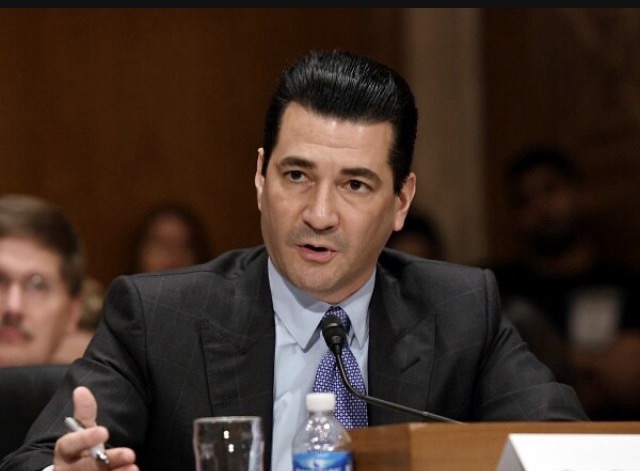
His net worth is estimated to be in the multi-million dollar range, reflecting his extensive roles in both public service and the private sector.
In summary, the involvement of former public officials like Dr. Scott Gottlieb, Lois Quam, Michael Neidorff, Demetrios Kouzoukas, Chelsea Clinton, in these private health company boards highlights a significant intersection of public policy and private profit. As these companies receive substantial funding through Medicaid, driven by taxpayer dollars, they also channel millions into political donations and lobbying.
This creates a cycle where public funds flow into private coffers, and those private entities, in turn, wield significant influence over both the healthcare landscape and the political arena.
The resulting conflict of interest is clear: the more these companies profit, the more they can invest in shaping policies that further their financial interests, potentially at the expense of the very patients and taxpayers funding the system.
By Jessi Sandfort
Rogue Journalism😚🙃
Next Article
Next Up for Me: Who is Scott Gottlieb and why isn’t the Public Bothered?
https://brownstone.org/articles/the-censorious-scott-gottlieb-was-a-major-influence-on-lockdowns/
 Live Life Free