Can you imagine opening your 12-year-old daughter’s phone and finding messages from classmates from boys saying they want to rape her? Or to get on their little dicks and ride them and rub their titties?Can you imagine opening your 12-year-old daughter’s phone and finding messages from classmates from boys saying they want to rape her? Or to get on their little dicks and ride them and rub their titties?Can you imagine opening your 12-year-old daughter’s phone and finding messages from classmates from boys saying they want to rape her? Or to get on their little dicks and ride them and rub their titties?
Or the mom who opens her daughter Snapchat, and finds a grown man jerking off in a video?
Or the mom and dad who find 18-year-olds 21-year-old 23-year-old grown men-BOYS luring our 13 and 14-year-old daughters through Snap, TikTok, IG, FaceTime to meet them???
Or the middle school girl at your own middle school, who had been being trapped online, manipulated, and lured into being picked up and brought to local hotels for months??
It’s happening in every town across the country and globally. And if you think it’s not, you were completely living in an alter reality.
We throw our toddlers on iPads so we can “enjoy” a quiet dinner. Meanwhile they’re playing super violent, mature games and using games and apps created by and for child predators and pedophiles. PART II: https://live-life-free.com/2026/02/15/part-ii-forcing-our-babies-onto-devices-knowing-mounting-data-of-predators-and-pedos-lurking-in-the-shadows/
Now we have normalized giving preteens and brand new teenagers with decision-making skills of hens and roosters, access to the entire world and all the evil in it. Am a I dark or pessimistic? No I’m a Realist.
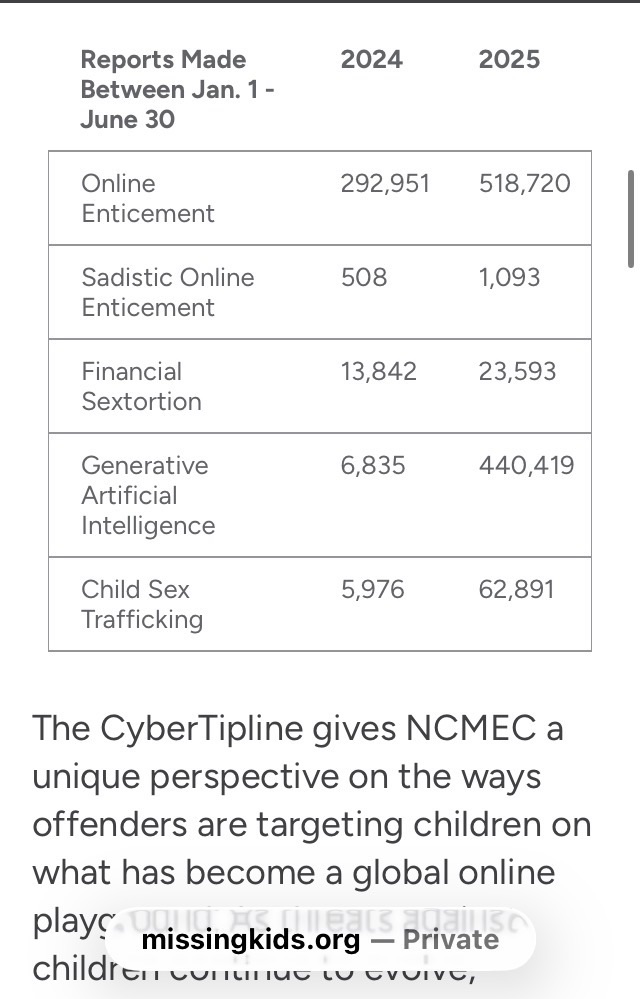
Recent child-safety research shows a measurable rise in online exploitation risks for children and teens, largely connected to social media, gaming chats, and private messaging apps. In the United States, the National Center for Missing & Exploited Children (NCMEC) reported over 36 million suspected online child-exploitation tips in 2023, compared with about 21–22 million in 2020. While part of this increase reflects better reporting systems and automated detection tools, child-protection experts also note that the digital environment itself has expanded rapidly, giving harmful actors more ways to reach young users.
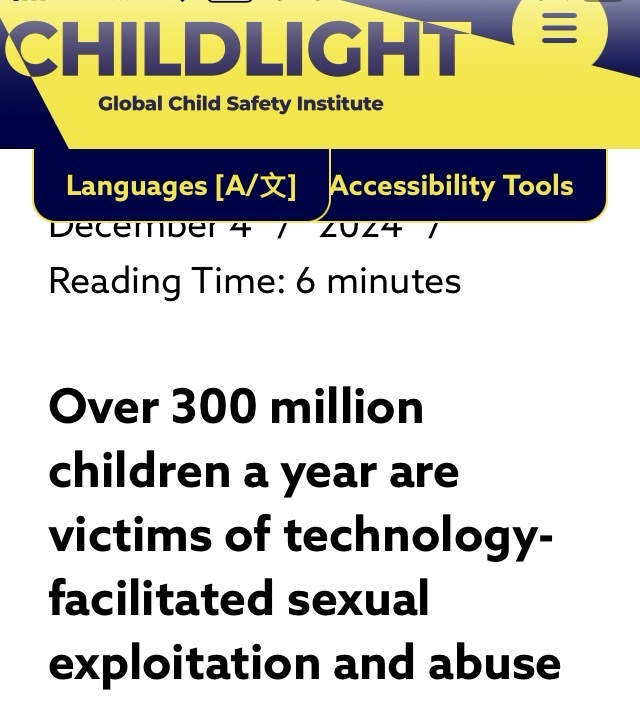
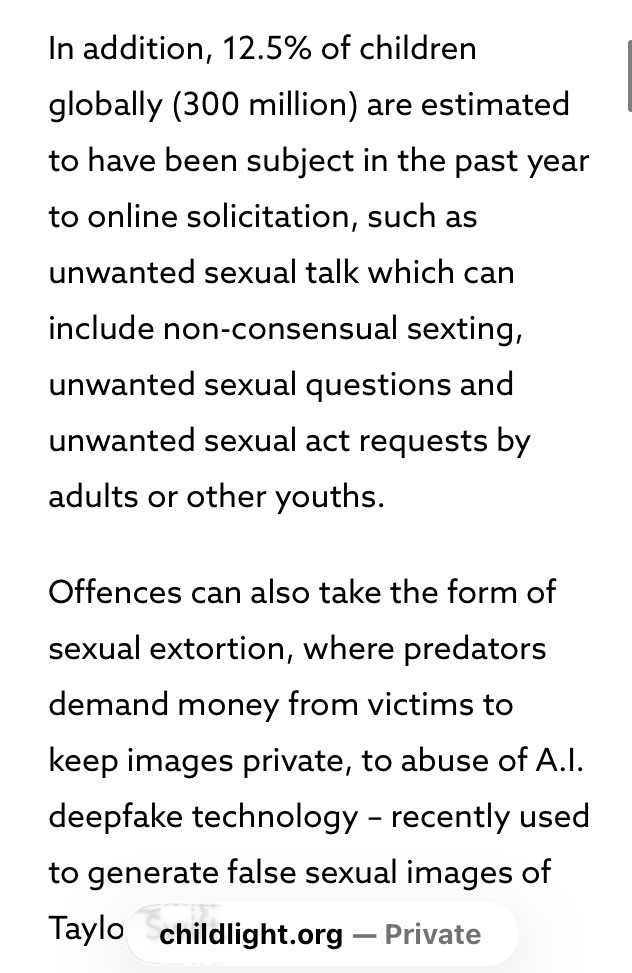
On a global scale, international research groups estimate that hundreds of millions of children each year encounter some form of unwanted sexual communication or technology-facilitated exploitation online. Surveys of youth in North America and Europe commonly show that 1 in 4 to 1 in 5 teenagers report having received inappropriate messages or requests from strangers at least once. Among younger age groups, exposure is beginning earlier than in past decades, largely because many children receive their first personal device between ages 9 and 11.
Screen-time data also helps explain the increased exposure. Studies from organizations such as Common Sense Media consistently find that U.S. teens (ages 13–18) average 7–9 hours per day of entertainment screen time, not including schoolwork, while children ages 8–12 average 4–5 hours daily. Within that time, social media alone often accounts for 2–4 hours per day for teens. Greater daily time online statistically raises the likelihood of encountering unknown contacts or inappropriate content, even when children are not actively seeking it.
A newer trend influencing statistics is the misuse of artificial intelligence and anonymous accounts. Monitoring groups have reported double-digit year-over-year percentage increases in digitally altered or AI-generated exploitative images and videos being flagged online. Law-enforcement agencies in several Western countries have likewise reported 20–30% increases in recorded online-grooming or luring offenses over five-year periods. These numbers do not mean every child is directly harmed, but they do show that the volume of digital risk indicators has grown significantly alongside technology adoption.
Importantly, experts emphasize that rising statistics also reflect improved awareness, easier reporting tools, and stronger automated detection by tech platforms. Even so, the combined data indicates that today’s children are navigating a more connected — and more complex — online landscape than previous generations. This is why pediatric and educational organizations continue to recommend early digital-safety education, device-free sleep routines, privacy-setting reviews, and open communication so children feel safe reporting uncomfortable interactions.
Bullying
There has been a documented rise in bullying — especially cyberbullying — among children and teenagers over the past decade, closely tied to increased social media use, smartphones, and group-chat culture. While traditional in-school bullying still exists, many researchers note that harassment now often continues after school hours online, which can intensify its emotional impact because there is no clear “off” time.
National youth surveys in the United States consistently show that about 1 in 5 students (around 20%) report being bullied at school each year. When looking specifically at online behavior, the numbers are slightly higher for certain age groups. Multiple large studies from the early-to-mid 2020s report that 25–30% of middle- and high-school students say they have experienced cyberbullying at least once, and roughly 15% report repeated incidents. Girls statistically report higher rates of online harassment than boys, particularly on image-based social platforms, while boys report slightly higher rates in gaming or chat-forum environments.
The increase is partly connected to time spent online. U.S. teens average 7–9 hours per day of recreational screen time, and children ages 8–12 average 4–5 hours, excluding schoolwork. Research shows that the likelihood of encountering online harassment rises with more daily social media hours, especially beyond 3 hours per day. Group messaging apps and anonymous accounts are frequently cited as environments where bullying escalates quickly because comments can spread to large
peer circles within minutes.

Schools and pediatric mental-health organizations also track the emotional impact. Students who report frequent bullying are statistically more likely to experience anxiety, depressive symptoms, and sleep disruption. Surveys often find that about 10–15% of bullied students show signs of significant emotional distress, and cyberbullying victims are more likely to report feeling isolated because the harassment can follow them home through their devices.
At the same time, experts caution that higher statistics do not only mean more bullying is happening — they also reflect better reporting, broader definitions, and increased awareness among students and parents. Many schools now conduct anonymous climate surveys, and social platforms have added reporting tools, which naturally raises the number of recorded incidents. Even with those factors considered, the overall trend indicates that digital bullying has become more visible and more persistent, which is why prevention efforts increasingly focus on digital citizenship education, open parent-child communication, and encouraging students to report problems early rather than staying silent.

Why are we giving our babies of all ages these horrible devices and subjecting them to this evil that’s prying and preying on them???
https://youtu.be/yVRlxMsVPko?si=_scBBpC4-0h5DI18
NEXT:
 Live Life Free