Coming soon
Category Archives: Social media, parenting, freedom, society
Youth Sports : The Good, the Bad and the Be Better
Coming soon
Carrying the Emotional Weight: Reputation, Relational Aggression, and Family Scapegoating
There is a particular kind of exhaustion that comes from always being the person who fixes things.

The one who apologizes first.
The one who smooths over tension.
The one who absorbs discomfort so everyone else can feel comfortable again.
For many people — especially within families — this role develops slowly and quietly. It rarely begins with obvious conflict. Instead, it grows through subtle patterns: misunderstandings that always circle back to you, conversations about you instead of with you, or a feeling that no matter what happens, responsibility somehow lands in your lap.
When these patterns finally become visible, the realization can feel shocking.
But it can also be deeply clarifying.
Reputation Management and Relational Aggression
Healthy relationships rely on direct communication. Problems are addressed openly and accountability is shared.
Unhealthy dynamics often look very different.
Reputation management, in its unhealthy form, occurs when someone attempts to control how others perceive a situation — or a person — rather than addressing conflict honestly.
This may include:
- selective storytelling,
- exaggeration or omission of important details,
- presenting concern as kindness while planting doubt,
- or positioning themselves as the reasonable or wounded party while subtly implying another person is difficult.
Alongside this is relational aggression — conflict expressed through relationships instead of direct confrontation.
It may appear as:
- exclusion or selective invitations
- withholding information
- gossip disguised as worry
- backhanded compliments
- triangulation (talking about someone instead of to them)
- or influencing others’ opinions behind the scenes
Because these behaviors are rarely loud or dramatic, the person experiencing them often doubts their instincts for a long time.
Many people initially assume they are simply being “too sensitive.”
Often, they are actually noticing patterns.
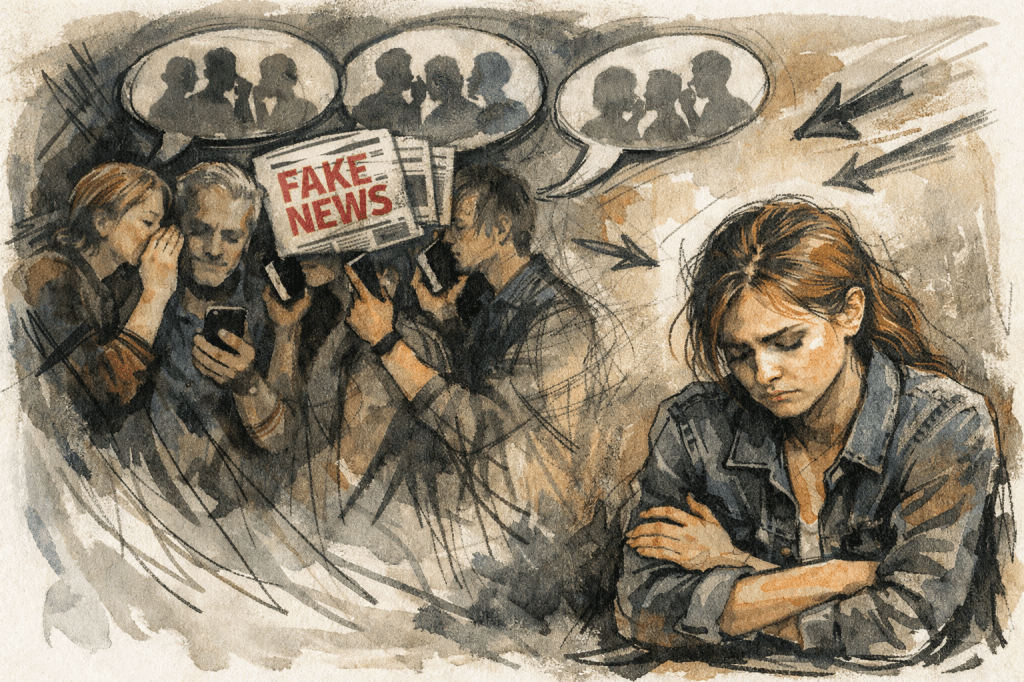
Why Someone Tries to Control a Narrative
Attempts to reshape another person’s reputation are rarely random.
Sometimes it comes from insecurity or comparison.
Sometimes from fear of losing influence.
Sometimes from jealousy or discomfort when someone else grows emotionally healthier.
People may try to elevate themselves socially by creating contrast — building themselves up while quietly positioning another person as less capable, less stable, or less connected.
Ironically, those targeted are often individuals who:
- avoid gossip,
- value honesty,
- or refuse to participate in social maneuvering.
Calm authenticity can unintentionally threaten someone invested in controlling perception.
The Family Scapegoat or “Truth-Teller”
Within families, long-standing emotional roles often develop without anyone consciously choosing them.
One person becomes the peacemaker.
Another avoids conflict.
Someone becomes the caretaker.
Sometimes one individual becomes the person blamed when tension arises — the scapegoat — or the one who notices uncomfortable truths others would rather avoid.
Common signs include:
- Being blamed for problems you did not create.
- Having your memories or experiences questioned.
- Hearing phrases like “you’re crazy.” “Why can’t you just let it go?” … when you finally don’t let it go.
- … Note: Clinicians call the “ You’re Crazy” label the most unproductive no-no. The absolute worst thing you can do to someone.
- Being expected to tolerate behavior others are not asked to tolerate.
- Acting as the emotional listener or fixer for everyone else.
- Experiencing pushback when you grow, change, or set boundaries.
- Being described very differently by friends or colleagues than by family narratives.
- Feeling responsible for restoring peace even when you were hurt.
Many empathetic or emotionally aware people fall into this role because they value harmony.
Ironically, compassion can become the very trait others rely on unfairly.
The Pattern of Always Apologizing First
Apologizing is not weakness. In healthy relationships it reflects maturity and empathy.
But when one person consistently apologizes first — regardless of who caused harm — the balance shifts.
Over time:
- others may stop examining their own behavior
- accountability becomes uneven
- and repair becomes expected rather than appreciated
The emotional labor quietly becomes one-sided.
Many people in this role apologize because silence feels unbearable. They want resolution. They want safety restored.
But automatic repair teaches others they never have to step forward.
Eventually the apologizer may feel invisible, misunderstood, or emotionally depleted without fully understanding why.
What Happens When You Stop Carrying Everything
Many people fear that if they stop fixing conflict immediately, relationships will collapse.
Often something else happens.
At first, discomfort appears.
Silence replaces the familiar cycle. Some people may become irritated or increase pressure to pull the old dynamic back into place.
This period can feel unsettling.
But it reveals important truths.
Some relationships become healthier when responsibility becomes shared.
Others reveal they depended on one person carrying all the emotional work.
Both outcomes bring clarity.
Quiet Signs a Narrative Has Been Built About You
Many people recognize reputation manipulation when they notice:
- others suddenly acting differently without direct conflict,
- hearing distorted versions of conversations,
- exclusion followed by casual mentions meant to be overheard,
- or feeling subtly isolated without understanding why.
These experiences can feel deeply personal.
But people often trust their own direct experiences over time. Consistent behavior quietly corrects misinformation more effectively than emotional defense.
Calm Ways to Protect Yourself Without Creating Drama
Change does not require confrontation or hostility.
Often the strongest responses are quiet ones.
Speak directly when necessary.
Simple clarity works better than long explanations.
Strengthen direct relationships.
Authentic connection dissolves misunderstanding faster than defending yourself through intermediaries.
Apologize only for your part.
“I’m sorry I raised my voice” is very different from apologizing for an entire situation.
Reduce oversharing with those who misuse information.
Allow pauses.
If someone else owes accountability, give them space to step forward.
Do not compete socially.
Confidence rarely needs advertisement.
Consistency over time speaks louder than arguments.
A Gentle but Important Truth
When someone steps out of a scapegoat or repairer role, pressure sometimes increases temporarily.
Old systems resist change because familiarity feels safe.
That pressure does not mean you are wrong.
It often means the dynamic itself is shifting.
People who rely on relational aggression frequently underestimate how perceptive others are. Over time, patterns become visible without dramatic exposure.
Healthy relationships do not require constant self-sacrifice to survive.
They require mutual respect.
And sometimes the most powerful step toward peace is not proving yourself louder — but simply choosing not to carry what was never yours to hold.

Other Sources
Research / Academic Reviews
Relational Aggression Research Review:
Family Violence & Scapegoating Research:
American Psychological Association Emotional Abuse Overview:
⭐ Trauma & Family Systems Education
Dr. Ramani (Clinical Psychologist — Narcissistic Family Systems):
Patrick Teahan LICSW (Family Trauma Therapist):
https://www.youtube.com/@patrickteahanlicswtherapy
HealthyGamerGG — Dr. K (Harvard Psychiatrist):
https://www.youtube.com/@HealthyGamerGG
⭐ Highly Recommended Books (Experts)
Adult Children of Emotionally Immature Parents — Lindsay Gibson:
Complex PTSD: From Surviving to Thriving — Pete Walker:
https://www.pete-walker.com/complex_ptsd_book.html
The Gaslight Effect — Robin Stern:
Teen Organization and Creating Serene Sanctuary Private Space.
… Work in progress
A clutter-free, peaceful living space also helps the mind unwind.
Parenting is hard as it is. Especially working parents and busy households. Our own patterns of cleanliness and organization are a broad topic and the there’s that of passing our habits to our children.
Did you come from a cluttered home? An overly organized? A balance? Did you learn skills or did cleaning ladies do it for you?
I’ve found through trial and error, I would like the girls prepared with lifelong basic skills to organize and clean their living space. And also learned a nagging, ongoing demands “Clean your Room” with endless unfulfilled threats is pointless.
But modeling it, is helpful.
Although I do have more time in day than maybe other parents may have. I have time and time again re-organized the girls rooms. One day at a time depending who is needing it most.
Showing them different steps by doing it for them. Then doing it with them. It’s a noticeable difference too when they may be having a rough week. To give them organized and peaceful private space, like their bedrooms.
When life is already overwhelming. Schoolwork is piled up, athletics, and extra curricular expectations fill their schedules. Their social lives are just a big learning experience right now. They are absolutely an inundated with over information and overstimulation from the moment they get up until they close their eyes – day after day after day – what makes us think that just shouting “go clean your room” and not giving them the proper support and skills is a good idea.
The good news is that you can see immediate relief in moods and more stability in emotions.
Secondly, you can see the repetitive habits do sync in.
It works!
They do start automatically doing this themselves.
Humans Crave order.
When children see how easy it is to put things in the right place the first time, and have clean, organized space to unwind their minds in this overly stimulating world we live in, they naturally start doing it themselves… without any parental nagging.
Everything has its place.
Garbage in the garbage can or a little trash bin.
Recycling in recycling.
Dirty clothes in the laundry basket.
Dirty dishes in the dishwasher (the right way).
Clean clothes, shoes, bags in their designated spot.
Life doesn’t have to be so difficult. Simple processes. It’s not being a clean freak or ocd. It’s lifelong skills. Time saving; life-streaming time savers.
- Organizing Clothes:
- Personal Hygiene and Makeup:
- Keeping Keepsakes:
- Workspace:
- Fresh clean bedding
- Nice lighting
- Cozy Decor
- Plants
This all probably sounds so basic. And obvious. But it really makes a difference !

Part II : Forcing our babies onto devices knowing Bullies, Predators and Pedos Lurk in the Shadows

Dangers of Roblox and MineCraft
Feb 6, 2026, this young girl took her life. Penelope was reportedly drawn into an online group that encouraged self-harm through interactions connected to Roblox. The report suggests her parents believe this association with a harmful online community contributed to her mental distress and decision to end her life.
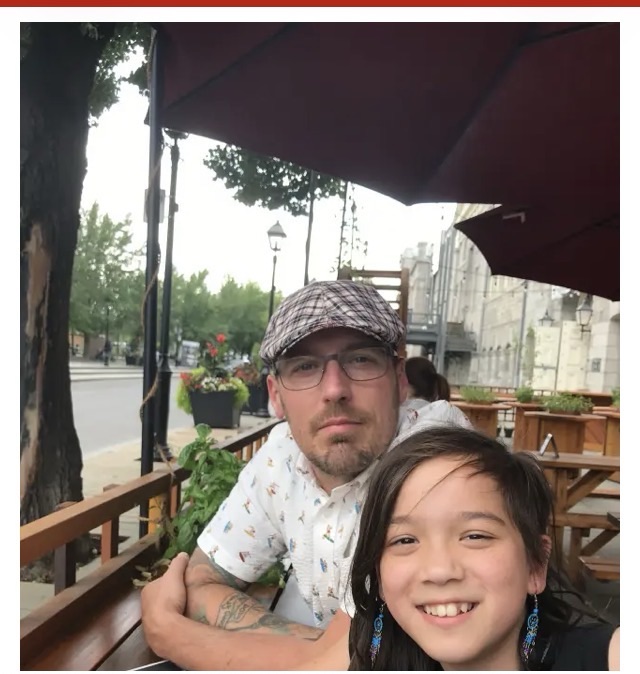
In January 2026, 15-year-old Thomas Medlin of St. James, Long Island, went missing after school on January 9. According to reports from his family and law enforcement:
Thomas left Stony Brook School shortly after classes ended and ran to the nearby Long Island Rail Road station. He then traveled by train into New York City, arriving at Grand Central Terminal, where surveillance footage last captured him that afternoon. Family members believe Thomas traveled into Manhattan to meet a person he had been communicating with via the online game Roblox, based on conversations and his behavior before he left. His mother said this was uncharacteristic of him, and she has since joined volunteers in search efforts. The Suffolk County Police Department released images of him and asked the public for assistance. Roblox publicly stated it was “deeply troubled” by the incident and was working with law enforcement, reiterating that the platform has safety systems designed to protect young users.
At the time of these reports, Thomas had not been located, and authorities were continuing their investigation.
1. Overall Context: How Common these Games Are
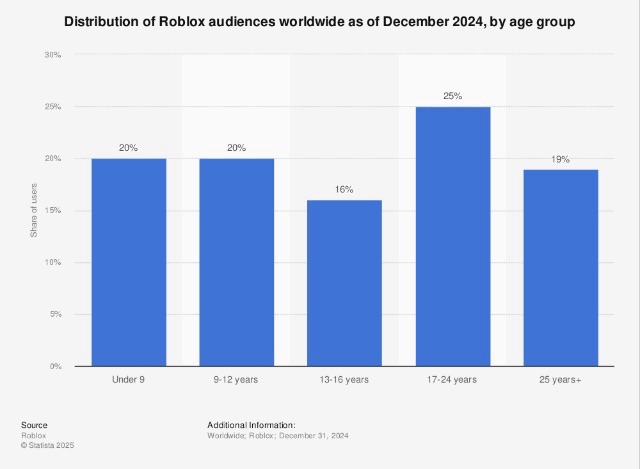
Roblox has over 151 million daily active users worldwide, with a significant proportion under age 13, making child safety a major concern. We don’t need to be scientists to see children, even our very own, behaved like absolute crackheads when they’re crack, a.k.a. devices and games are taken away. There’s beyond enough scientific data on top of what we see with our own eyes to prove that the devices game is an apps are changing their thought patterns, rewiring their brains, creating an absolute physical and mental addiction based on the rush of endorphins and serotonin.
as parents are number one job is to raise healthy children, and while we do that in every aspect, we are still handing the absolute devil over to our kids and placing it literally in their hands!!!!
Why!!!
🚨 2. Primary Safety Risks on Roblox
❗ Child Grooming & Predator Contact
Governments have demanded urgent meetings with Roblox over reports that children are being approached by predators or shown graphic content. In the U.S., police have arrested adults alleged to have used Roblox to sexually exploit minors, including coercion into pornography. A nonprofit study found that one in three boys (ages 9–12) experienced some form of online sexual interaction, and gaming platforms like Roblox/Minecraft are part of those environments where this happens.
🧑💻 User-Generated Content & Moderation Gaps
Roblox’s vast user-generated game library and chat features make it challenging to screen 100% of content effectively. Some researchers have documented that predators and harmful content can still slip through—even with filters and age gates in place.
🚫 Regulatory & Legal Actions
Multiple countries banned or blocked Roblox due to safety concerns, including Egypt, Qatar, Algeria, Russia, and others. Australia is reviewing its rating and oversight of the platform, potentially imposing fines if child safety standards aren’t met.
📉 Time and Well-being Risks
Excessive gaming has been linked to behavioral issues, sleep loss, school refusal, and possible signs of gaming disorder in a minority of kids. One Australian report noted 2–5% meeting clinical criteria for problematic online gaming and up to 10% showing subclinical signs.
🧱 3. Safety Landscape for Minecraft
🧑🤝🧑 Online Interaction Risks
Minecraft’s multiplayer chat and servers can expose children to inappropriate language, bullying, and potential contact with strangers/predators, though the platform itself is not usually built around social messaging the way Roblox is. Private or unofficial servers can be particularly risky, where adults or older teens can moderate content themselves or introduce inappropriate material.
⚠️ In-Game Behavior Concerns
Like most online games, there are reports of bullying, harassment, and exclusion that can occur in Minecraft communities. Some extremist groups and curated content have exploited open creative games (including Minecraft) to embed hateful or radical messaging, though these are exceptions rather than mainstream experiences.
🧠 Game Addiction & Time Use
Although ESRB rates Minecraft E10+ with parental controls available, experts still report the potential for problematic gaming patterns if screen time goes unchecked.
🧠 4. Broader Online Gaming Risks That Apply to Both
These aren’t exclusive to Roblox or Minecraft, but relevant:
📉 Cyberbullying & Harassment
Online games are a frequent venue for harassment and bullying among youth, which can impact mental health.
🎣 Predator Grooming Often Moves Off-Platform
Predators may use in-game communication to initiate contact, but often move to less regulated platforms, such as messaging apps.
🧠 Gaming Disorder & Behavioral Effects
Gaming addiction (sometimes called gaming disorder) affects an estimated 1–3% of players generally and can overlap with age groups that engage in Roblox and Minecraft. There is NO WAY this number isn’t grossly off. We can see our kids instant addictions and changes in behaviors. And if you can’t see it, or don’t want to deal with it, you are a shitty, lazy, complacent parent not doing your basic job. Sorry. Grow a set and protect your kids.
🧡 5. What Experts Emphasize
While these games have real draw and developmental benefits — creativity, problem solving, socializing — experts and safety organizations underscore that supervision, parental controls, and guided conversations are essential for minimizing risk and helping children navigate online spaces safely.
Sources & Reference Outlets
Reuters – International news reporting on government investigations and platform safety concerns involving online gaming platforms. The Guardian – Coverage of technology, youth culture, and reported misuse of gaming platforms. Parents.com – Research summaries and expert commentary on children’s online safety and digital behavior trends. Internet Matters – UK-based nonprofit providing parental guidance and safety recommendations for digital platforms and games. Norton Online Safety Blog – Cybersecurity company resources on gaming safety, privacy, and parental controls. Seattle Children’s Hospital (Digital Safety Resources) – Articles and medical guidance on cyberbullying, screen time, and mental health impacts of online gaming. ESRB (Entertainment Software Rating Board) – Official game ratings, content descriptors, and parental control guidance. Qustodio Annual Digital Usage Reports – Parental control software company publishing yearly statistics on children’s screen time and app usage trends.
Pilates
Consistency and Quality
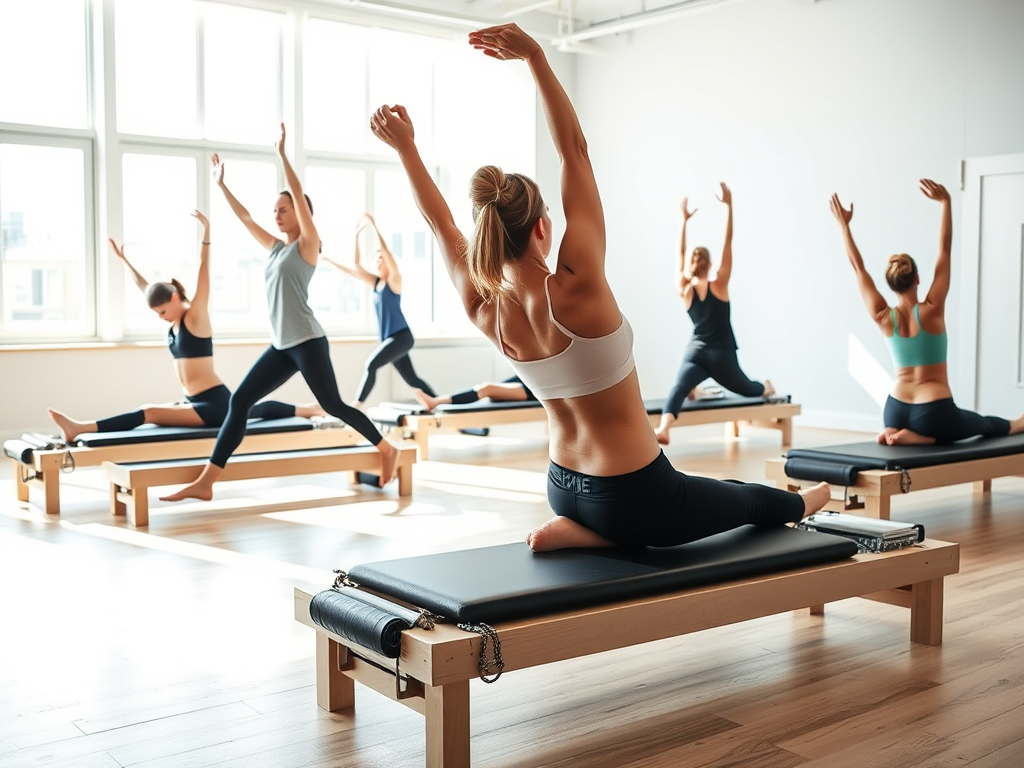
We live in a society where more is less. No Pain, No Gain. Over-indulge. Over-correct. Quick fixes. What looks good over what feels good. Ego-driven motivation over true self-love and self-care. Of course this is the approach to our American lifestyle in every aspect, including food and exercise!
Where fad dieting has profited billions of dollars at the expense of true health and happiness. The DexaTrim, SnackWells, Jazzercize moms of the 80s raised Stacker-popping CrossFitters and yo-yo dieters. Who in turn, are raising, year-round travel sports kids starting at six-years-old!
Most of us grew up playing sports hard and fast and all day long. If you twisted an ankle, you wrapped it and kept playing. There was no mommy and daddy coddling you. And that never really stops for most! If you aren’t running hard miles, pushing through knee pain, or hip pain, or back pain. If you aren’t crippled on the couch after Cross-Fitting or any X trendy workout, then you aren’t working!
Pain is not Gain. I am still a bad-ass and not a slacker. Consistent daily Classic Pilates, cardio outdoors, and weight training.
Well, girl, you ain’t the poster child of fitness, you say. No, I am not. I have cycled through body composition over the last 14 years more than I ever have imagined. Super fit to pregnant to pretty super fit to pregnant. To fit, to pregnant. To my body is broken. To my lower back and SI joint so hyper flexed from pregnancy and birth. To pretty fit, and almost back.
We are in a society of also OVER-PRESCRIBED Medications. Head-meds. Body-meds.
Enter Ozempic and Waygovy billion-dollar profit market! Its no surprise corporate vampires want to profit off of over-indulgent, quick-fixers. This contradicts the other aspect of our NO PAIN, NO GAIN Mentality. Interesting, isn’t it.
It turns out that there is no quick solution.
Although the “Ozempic” is not true health. Neither really is running marathons everyday, or multiple a year or improperly throwing weights on a weekly basis.
Even the Elite Athlete benefits from the cross-training of consistent, stability, strength, and flexibility. Building those Core-4 do not have to blow a budget. They do not have to blow your joints out for life. They do not have to leave you running to orthopedics, and surgeons, and chiropractors. They should not be shamed or looked down upon!
We get one set of joints. Two if lucky … although the second will be titanium.
Mine will be a shoulder, at some point. Unfortunately. But I have learned.
Subtle yet Significant.
Consistency.
Pain is unnecessary for gain. *Bad Pain.
There are so many ways to train big and minuscule muscles in the body until they are trembling. Therefore gaining muscle mass as well as strength, flexibility can be achieved without overuse and injury to our joints.
Classic Pilates is the grand slam.
Through any injury or level, there is strength, flexibility and muscles to be gained in Pilates – Mat, Tower, and Reformer.
Pilates is my TOP 5 most important things you can do for overall mental and physical health, well-being and LONGEVITY.
All in all, getting outside every single day for fresh air. Resistance Bands. Eating Whole Foods and not processed foods or drinks as much as possible. 90% or more of overall consumption.
At the end of the day, Longevity is the name of the game. Of all the options vying for our money and attention, the choices that make sense for consistent LONGEVITY are logical choices that will bring grace through life and the aging process!
Devices are Destroying our Children
Can you imagine opening your 12-year-old daughter’s phone and finding messages from classmates from boys saying they want to rape her? Or to get on their little dicks and ride them and rub their titties?Can you imagine opening your 12-year-old daughter’s phone and finding messages from classmates from boys saying they want to rape her? Or to get on their little dicks and ride them and rub their titties?Can you imagine opening your 12-year-old daughter’s phone and finding messages from classmates from boys saying they want to rape her? Or to get on their little dicks and ride them and rub their titties?
Or the mom who opens her daughter Snapchat, and finds a grown man jerking off in a video?
Or the mom and dad who find 18-year-olds 21-year-old 23-year-old grown men-BOYS luring our 13 and 14-year-old daughters through Snap, TikTok, IG, FaceTime to meet them???
Or the middle school girl at your own middle school, who had been being trapped online, manipulated, and lured into being picked up and brought to local hotels for months??
It’s happening in every town across the country and globally. And if you think it’s not, you were completely living in an alter reality.
We throw our toddlers on iPads so we can “enjoy” a quiet dinner. Meanwhile they’re playing super violent, mature games and using games and apps created by and for child predators and pedophiles. PART II: https://live-life-free.com/2026/02/15/part-ii-forcing-our-babies-onto-devices-knowing-mounting-data-of-predators-and-pedos-lurking-in-the-shadows/
Now we have normalized giving preteens and brand new teenagers with decision-making skills of hens and roosters, access to the entire world and all the evil in it. Am a I dark or pessimistic? No I’m a Realist.
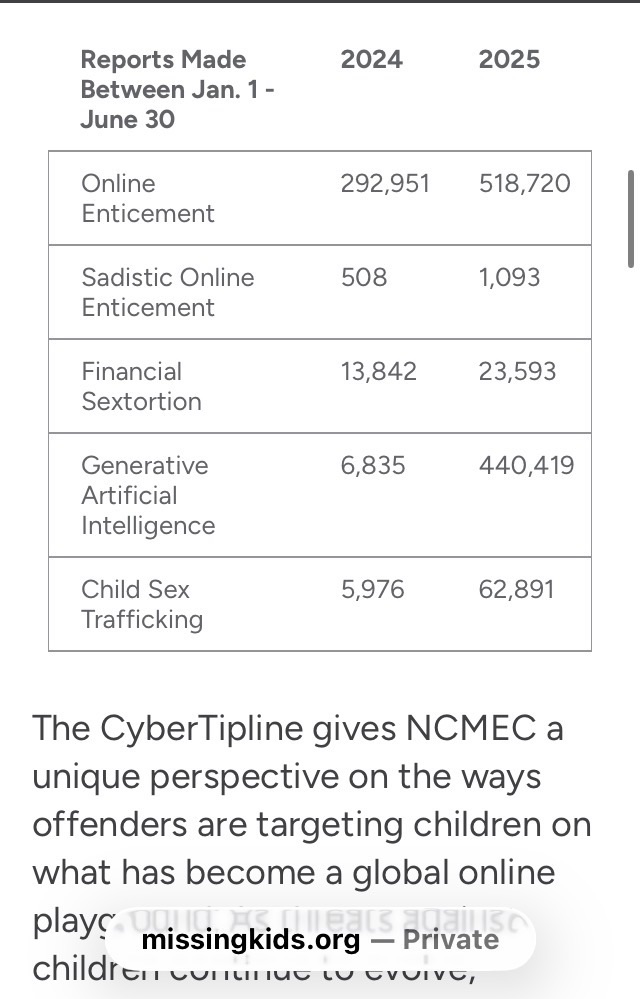
Recent child-safety research shows a measurable rise in online exploitation risks for children and teens, largely connected to social media, gaming chats, and private messaging apps. In the United States, the National Center for Missing & Exploited Children (NCMEC) reported over 36 million suspected online child-exploitation tips in 2023, compared with about 21–22 million in 2020. While part of this increase reflects better reporting systems and automated detection tools, child-protection experts also note that the digital environment itself has expanded rapidly, giving harmful actors more ways to reach young users.

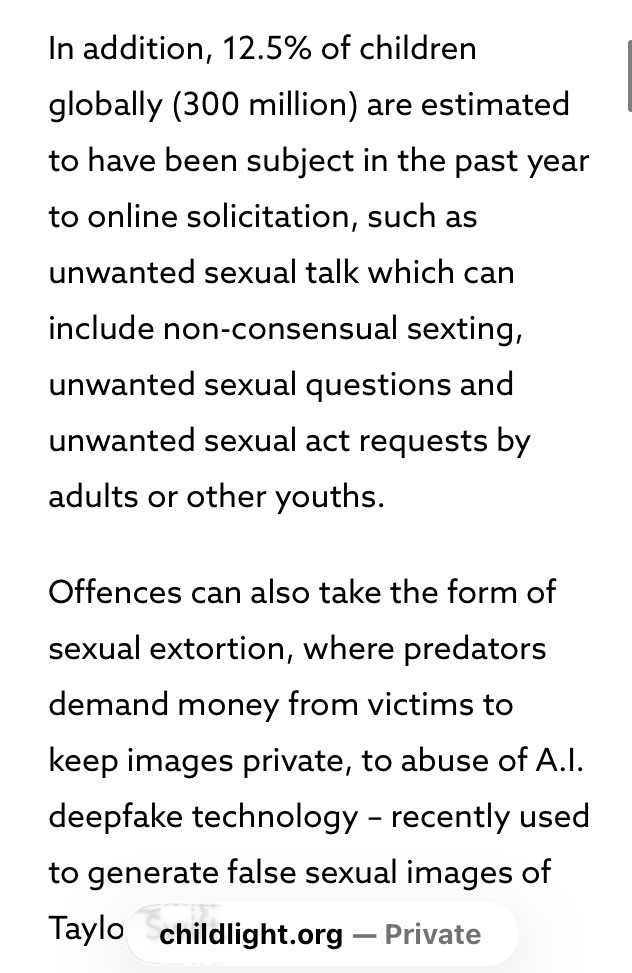
On a global scale, international research groups estimate that hundreds of millions of children each year encounter some form of unwanted sexual communication or technology-facilitated exploitation online. Surveys of youth in North America and Europe commonly show that 1 in 4 to 1 in 5 teenagers report having received inappropriate messages or requests from strangers at least once. Among younger age groups, exposure is beginning earlier than in past decades, largely because many children receive their first personal device between ages 9 and 11.
Screen-time data also helps explain the increased exposure. Studies from organizations such as Common Sense Media consistently find that U.S. teens (ages 13–18) average 7–9 hours per day of entertainment screen time, not including schoolwork, while children ages 8–12 average 4–5 hours daily. Within that time, social media alone often accounts for 2–4 hours per day for teens. Greater daily time online statistically raises the likelihood of encountering unknown contacts or inappropriate content, even when children are not actively seeking it.
A newer trend influencing statistics is the misuse of artificial intelligence and anonymous accounts. Monitoring groups have reported double-digit year-over-year percentage increases in digitally altered or AI-generated exploitative images and videos being flagged online. Law-enforcement agencies in several Western countries have likewise reported 20–30% increases in recorded online-grooming or luring offenses over five-year periods. These numbers do not mean every child is directly harmed, but they do show that the volume of digital risk indicators has grown significantly alongside technology adoption.
Importantly, experts emphasize that rising statistics also reflect improved awareness, easier reporting tools, and stronger automated detection by tech platforms. Even so, the combined data indicates that today’s children are navigating a more connected — and more complex — online landscape than previous generations. This is why pediatric and educational organizations continue to recommend early digital-safety education, device-free sleep routines, privacy-setting reviews, and open communication so children feel safe reporting uncomfortable interactions.
Bullying
There has been a documented rise in bullying — especially cyberbullying — among children and teenagers over the past decade, closely tied to increased social media use, smartphones, and group-chat culture. While traditional in-school bullying still exists, many researchers note that harassment now often continues after school hours online, which can intensify its emotional impact because there is no clear “off” time.
National youth surveys in the United States consistently show that about 1 in 5 students (around 20%) report being bullied at school each year. When looking specifically at online behavior, the numbers are slightly higher for certain age groups. Multiple large studies from the early-to-mid 2020s report that 25–30% of middle- and high-school students say they have experienced cyberbullying at least once, and roughly 15% report repeated incidents. Girls statistically report higher rates of online harassment than boys, particularly on image-based social platforms, while boys report slightly higher rates in gaming or chat-forum environments.
The increase is partly connected to time spent online. U.S. teens average 7–9 hours per day of recreational screen time, and children ages 8–12 average 4–5 hours, excluding schoolwork. Research shows that the likelihood of encountering online harassment rises with more daily social media hours, especially beyond 3 hours per day. Group messaging apps and anonymous accounts are frequently cited as environments where bullying escalates quickly because comments can spread to large
peer circles within minutes.

Schools and pediatric mental-health organizations also track the emotional impact. Students who report frequent bullying are statistically more likely to experience anxiety, depressive symptoms, and sleep disruption. Surveys often find that about 10–15% of bullied students show signs of significant emotional distress, and cyberbullying victims are more likely to report feeling isolated because the harassment can follow them home through their devices.
At the same time, experts caution that higher statistics do not only mean more bullying is happening — they also reflect better reporting, broader definitions, and increased awareness among students and parents. Many schools now conduct anonymous climate surveys, and social platforms have added reporting tools, which naturally raises the number of recorded incidents. Even with those factors considered, the overall trend indicates that digital bullying has become more visible and more persistent, which is why prevention efforts increasingly focus on digital citizenship education, open parent-child communication, and encouraging students to report problems early rather than staying silent.
Why are we giving our babies of all ages these horrible devices and subjecting them to this evil that’s prying and preying on them???
https://youtu.be/yVRlxMsVPko?si=_scBBpC4-0h5DI18
NEXT:
Pre-Op Day 2/4/26: Caregiver Test Run 🚙

Smooth smooth smooth

HSS set up my Pain Management meeting. Wonderful Dr took her time. Spoke to me for over 30 minutes no rush, nice clean, quiet cozy Office to go over. Had to deal with pain and have they’d be checking in with me..
 I made sure I knew how to get to my next appointment which was a chest x-ray.
They walked me to the next appointment area, which was the EKG , bloodwork, medical history.
Followed directly by another Doctor Who went again through my medical records crossed again the medication I was on reviewed my aftercare reviewed any important past medical history asked me identified any questions.
From there, all my blood work is already taken and already processed and putting in my chart.
as I had it right for Dr. Gulotta we waited maybe not even five minutes and he was in the Office office. He had a doctor studying with him and another female nurse or doctor to take notes.
Thoroughly again explain the total shoulder replacement process. Why is a medical necessity due to mine advanced arthritis. The bone on bone joints. The cartilage completely gone. The massive osteoarthritis/ osteophyte/ and many bone spurs.
Also, what he assumed would be bicep, tendinitis, and other tears that he could pair when he was in.
Because I have done the extra and expensive metals test that cost almost $800, they did find that I was highly allergic to nickel. Therefore the plan was and what they did was use all titanium.
Niel and I felt so good with him . The entire process. We’ve never had a medical experience like this..
My Total Shoulder Replacement- The Prequel. The Back Story
It’s been at least nine years since the first orthopedic doctor told me that my shoulder was severely advanced arthritis for my age, and that I was heading for a total shoulder replacement. That was when I was 41? 40, maybe? I remember I was doing CrossFit and thought, “Oh, maybe the pain wasn’t going away.” I stopped being able to put my arm around my back to do my bra, take my sports bras on and off. So, it became worse and worse. It felt like you could feel the grinding, like I wanted to just always pop my shoulder out.
Of course, immediate denial—”How could that be? I’m only 41.”
So eight years later, seven years later, whatever, I’ve been to seven or eight different surgeons, different offices. Everyone has told me total shoulder replacement is now clearly the only option.
I’ve run out of all conservative options, and the last surgeon that I met, I did not like, and he just didn’t have a nice bedside manner, blah blah blah. He was short. He was rude. He thought any questions I had were obnoxious. I asked about the procedure and a technical question you said that’s for me to worry about and then I was built about $800 not even 15 minute appointment he may be done a couple of shoulder replacement a year.
At that point, my closest allies were my fear, instructor and owner at 94 Pilates and all my girls there. They saw me on a daily basis, working hard, yet really constricted with pain and major loss of range of motion. They were constantly supportive and helping me continue my fitness journey because despite the shoulder, I did lose almost 40 pounds going to Pilates daily, hiking, and doing n30 day hCG diet without the HCG that really reset my metabolism. And then continued low alcohol use and healthy eating.
It was through 94 Pilates that I had the recommendation from another male client, bodybuilder, boxer who had gone through a Total shoulder replacement with Dr. Gulotta at HSS.
I found Dr. Gulotta easily on the web. I reached out to them. They wanted images that I had. I sent a letter explaining my background and a copy of the MRI report. I did make one mistake and I had my phone number has been cut off so it took maybe six weeks or so as the summer had started and I thought I was OK and just so busy with the kids still living with a daily pain and lack of range of motion. Finally followed up and they said you’ve been trying to contact. You didn’t have the full phone number at that point they quickly got me into the Westchester office.
I had already waited a year thinking February is the best time, although it’s basketball season it’s better than spring season. And I wanted the motivation of being able to swim laps again and get my arm around to do freestyle which I haven’t been able to do in our new pool all summer 💔💔
He is the chief shoulder surgeon—and it’s like, maybe he’ll say I don’t need it. But he came in after the PA had looked at me and looked at my MRI, and they said, “Your total shoulder replacement is the only option. It’s the only thing I would do,” he said, “to fix what’s going on.” And at this point, it is a medical necessity, but it’s elective as far as timing.
So here I am. I’m scared as shit. About to go in Monday finally, after this nine-year rollercoaster of going from denial—”This can’t be”—to everything conservative, to living in pain, to having limited mobility, to not being able to play sports or swim with the kids, put on clothes comfortably, sleep well, because the pain, if I sleep on it, wakes me up, it’s so painful. So here I am.
The MRI showed at some point I was dislocated and put back wrong and went back into his place wrong. I think of all the wild things I’ve done the double jointed, putting my arms over my head and stepping over them like a jump rope on the climbing of trees, swinging on the jungle gym, gymnastics in the backyard all the swimming and diving. Butterfly. 200 IMs. 100 butterflies . 500 M free . All of the relays. The Diving team made impromptu to win Section 9. All of the Basketball the softball centerfield stretching my left arm all of just the Crazy play as a kid being rough on the waitress thing carrying trees over my head and furniture the multiple multiple moves I’ve made from apartments the houses to Miami and back to New York City to Ridgewood to Middletown to Warwick, the carrying babies and toddlers . To endless workouts and weights and training. Triathalons. Swimming wild and free in the oceans and lakes. Paddle boarding, Golfing, kayaking…
My Total Shoulder Replacement Surgery Day! HSS ❤️🩹 Dr Gulotta
February 8th, I started fasting. I woke up at 6:30 AM knowing I had to get up to make sure I ate, so I could stop eating by 8:00 AM. I made a big omelet with four eggs and milk, and some veggies. I had a cup of high protein Chobani yogurt, topped with strawberries and some cacao nibs, and a little bit of granola. I had a cup of coffee. And a nice big hot tea with creamer, and that really kept me full.
I received communion at Mass at 11:00 AM, and then I just drank water. Stopped drinking water about 9:30, went to bed, woke up at 4:00 AM.
I took a shower and we got in the car, we headed to HSS, parked in the parking garage across from the ambulatory HSS office. We walked right in. Everyone was amazing. There was one woman there ahead of me checking in. Then I was checked in.

The woman at the desk was absolutely amazing. A third patient walked in, he was really rushed and kind of annoying, and I could hear him in the room next to me. This was like his seventh surgery, but he kind of barged in when I was at the desk. That was the only kind of weird vibe. But other than that, they explained everything so thoroughly, so calmly. It was just so nice.
Then the nurse brought me back into the pre-op. Niel waited and they were extremely caring with him as well. They explained that they would get me ready and then he could come back and sit with me until operation. They also gave him a card with my patient ID on it so he could follow on the screen in the waiting room.
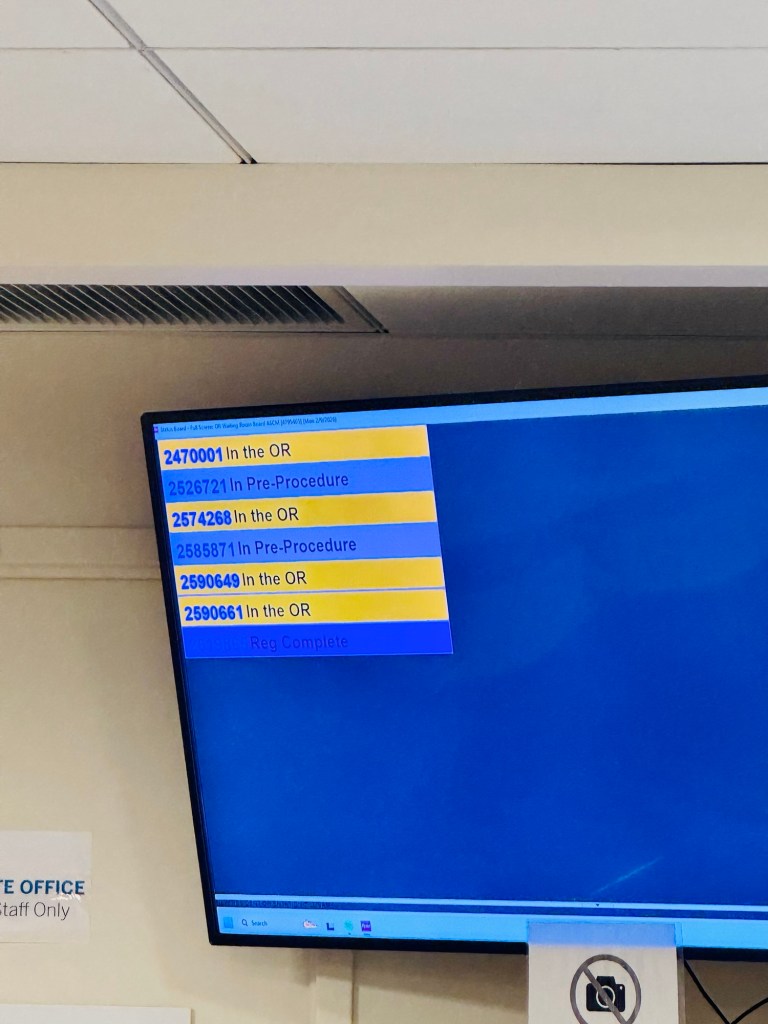
The sweet young nurse also got me started with another nurse, Eric. They were both incredible, the two of them. They pre-oped me with the urine sample, and then they got me into my gown, they explained everything. They put any items I brought into a bag that went to post-surgery. They bathed my arm and they shaved any hair, so gently though, like everything was so gentle. Then the other nurse got the IV prick into my right hand. They emphasized over and over again in such a calm way that they knew I had the nickel allergy, so they put me at so much ease with that. The whole experience was just so professional. It is what you hope. All of your medical experience is an interactions to be like. From booking appointments, to front desk, to the nurses, to the surgeon!
An incredibly nurse, Eric, assured me Dr Gulotta was the best. He did all of the “high profile” shoulders. ☺️🤩 And they all said if they were to go with anyone for shoulder, he’s the one. I smiled and laughed. Great to hear. My instincts are on. And he wasn’t the first employee to assure me of that!
Another doctor came in to go over my pain management after surgery, reviewed the medications they had already called in to CVS that we actually had already picked up. They explained the nerve block. Then the anesthesiologist came in. He was incredible. He said they were gonna give me just the general anesthesia, not totally knocked out and intubated or whatever, with the mask and all. So it was just through the IV, and they put the nerve block in when I was under, so I didn’t feel anything. The nerve block is just wearing off and this is the next morning. He was just so thorough and so kind and said he would be with me the entire time.
Then Dr. Gulotta came in again. He was just to the point and thorough and all so open and just kind, and went over what we were gonna be doing. We’re gonna be removing all the arthritis, all the bone spurs, putting in the all titanium shoulder replacement, the new ball and socket, all titanium. And again, he emphasized, “We know you have the nickel allergy and that’s why there will be no nickel.” He said while he was in there, he would clean up any bicep tendonitis or any other tears, which is what happened.
LAt that point Niel had been with me too, like they did the simple pre-op and then they brought Neil in to the waiting area pre-surgery. So Neil was with me when all those three, the three doctors, including the surgeon, anesthesiologist, and pain management, were in there with me.
Then we said goodbye and they rolled me into the operating room, which was probably the scariest part. Just tons of staff in scrubs. There’s four or five operating rooms right in a row. I went to operating room one. They moved me onto the bed, which looked like a beach chair, they called it. That’s a little overwhelming, the operating room. Just so movie like, they had music playing and all the equipment was out. Quickly the anesthesiologist said, “We’re just gonna get you right under. You’re not gonna remember anything till you wake up.” And that was it. And that’s what happened.
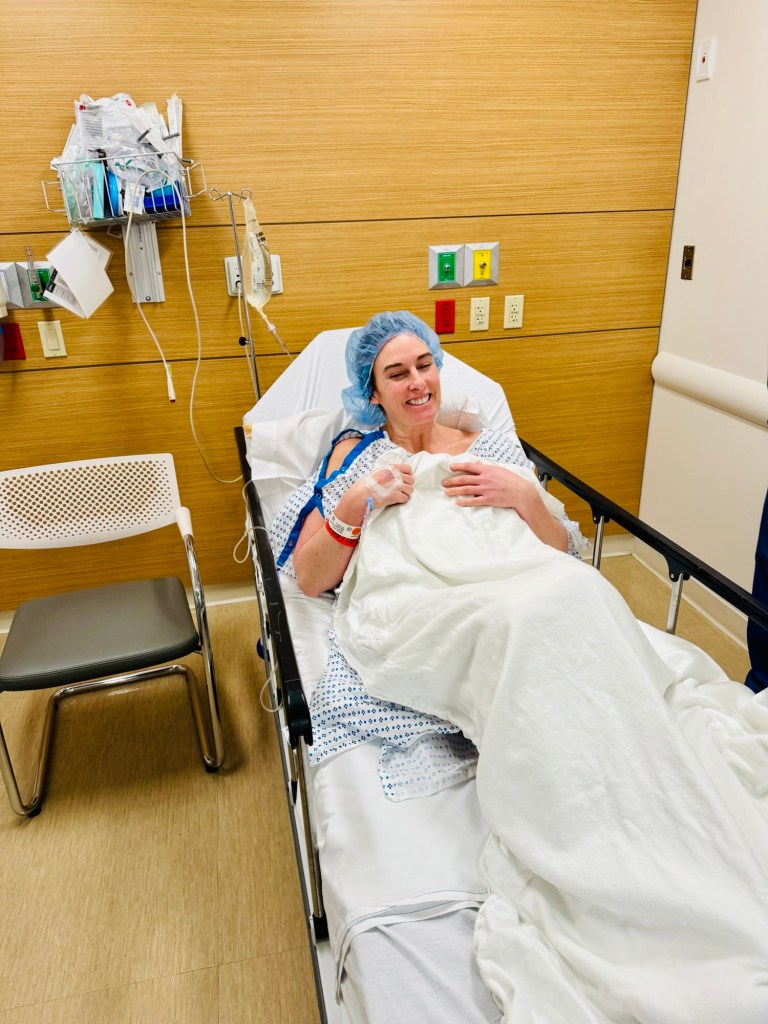
I woke up a little groggy in the recovery room. I think my last thought was something about the basketball girls, like, “Don’t hurt them,” ’cause our last game was really rough. It took a while for it to wear off.
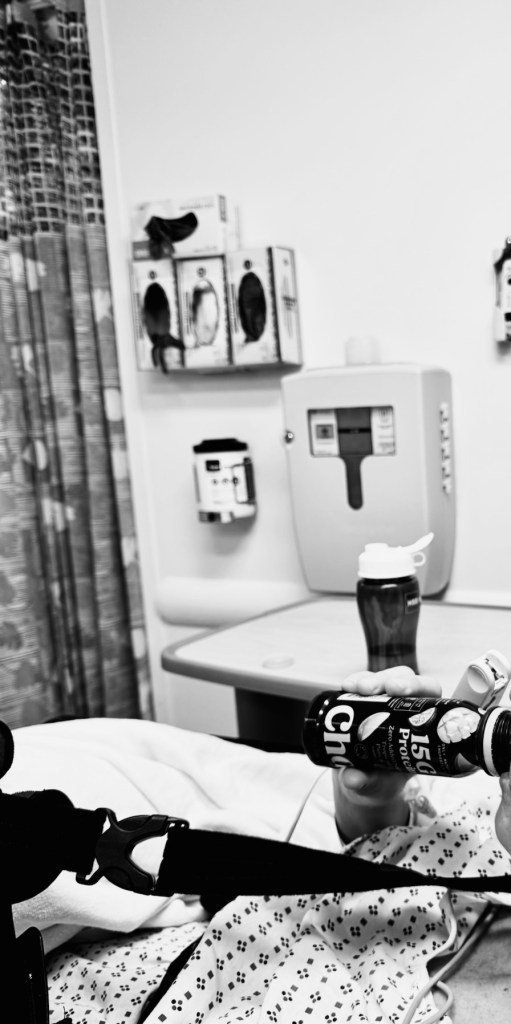
I guess in the surgery, which Dr. Gulotta explained to Niel and then to me in a follow-up call. He wasn’t thrilled. When he opened up the tools, there was a biofilm. He didn’t like the look of it and so he didn’t accept the package. He sent it back for another one, so that added an extra little bit of time, but I totally respect that thoroughness.
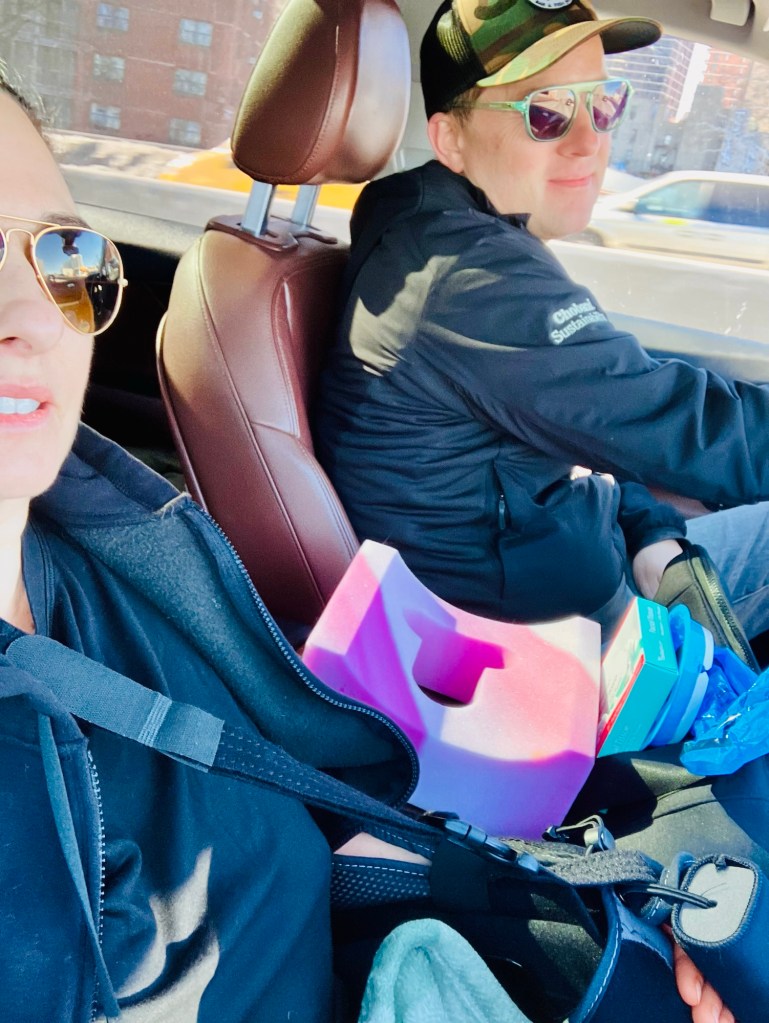
When I was ready they called Neil back and he sat with me and then he went and got the car when I was ready. They made sure I wasn’t sick. The ride home couldn’t have been smoother. The nerve block, again, was absolutely incredible and I didn’t feel a thing. The traffic at that time of day wasn’t terrible. Getting out of the city always is the FDR there to Harlem River Drive to the bridge. But it was smooth. I got home, I was in bed. I didn’t feel anything so it was just lay in bed and rest while you can. So that’s that. That was surgery day and I went to sleep about 9:00.
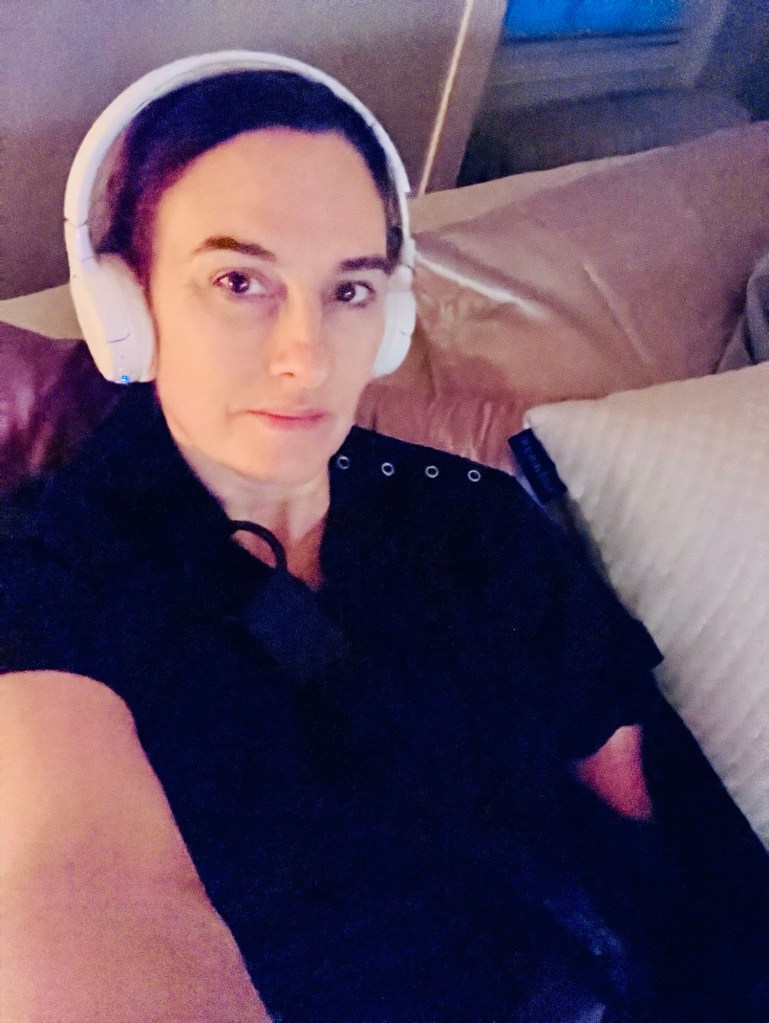
Woke up this morning with the girls about 6:00 AM. Still my fingers started to move and feeling’s coming back. Now it’s 10:15. It’s about 24 hours and definitely feeling more pain than I did as of yet. But it’s not in the joint, like all that joint pain that I had been living with is just gone. But there’s definitely a soreness going down my bicep and I’m just gonna try to get some more rest now.
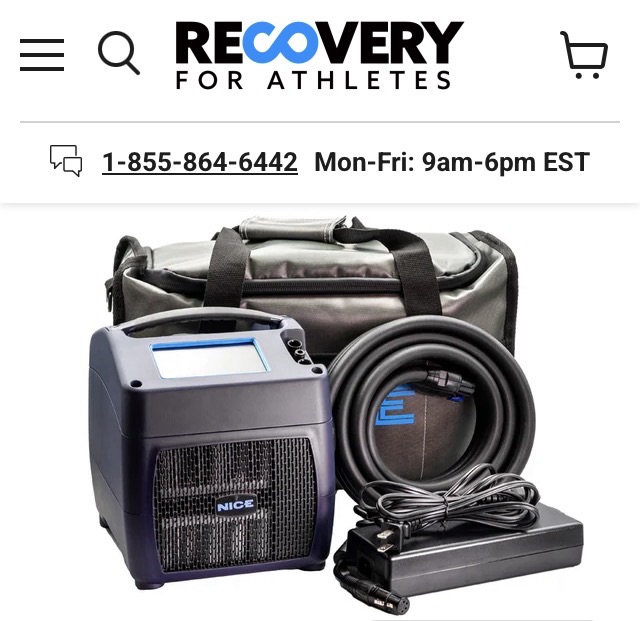
I am taking the non-narcotic pain medication. I’m taking a Naproxen. I took a baby aspirin. I have Tylenol to have with lunch and I did take one heavier pain med just now just to, like, ’cause I feel the pain setting in. I’m also using the cryotherapy machine, which is incredible. For now, I’m happy I’ve done it. I went through it and HSS is incredible. I sent Dr. Gulotta a quick message last night after I got his voicemail and he sent back a message this morning. Just great to hear. “Sounds like a great recovery so far.” “Let us know if you need anything.” So, all is well.
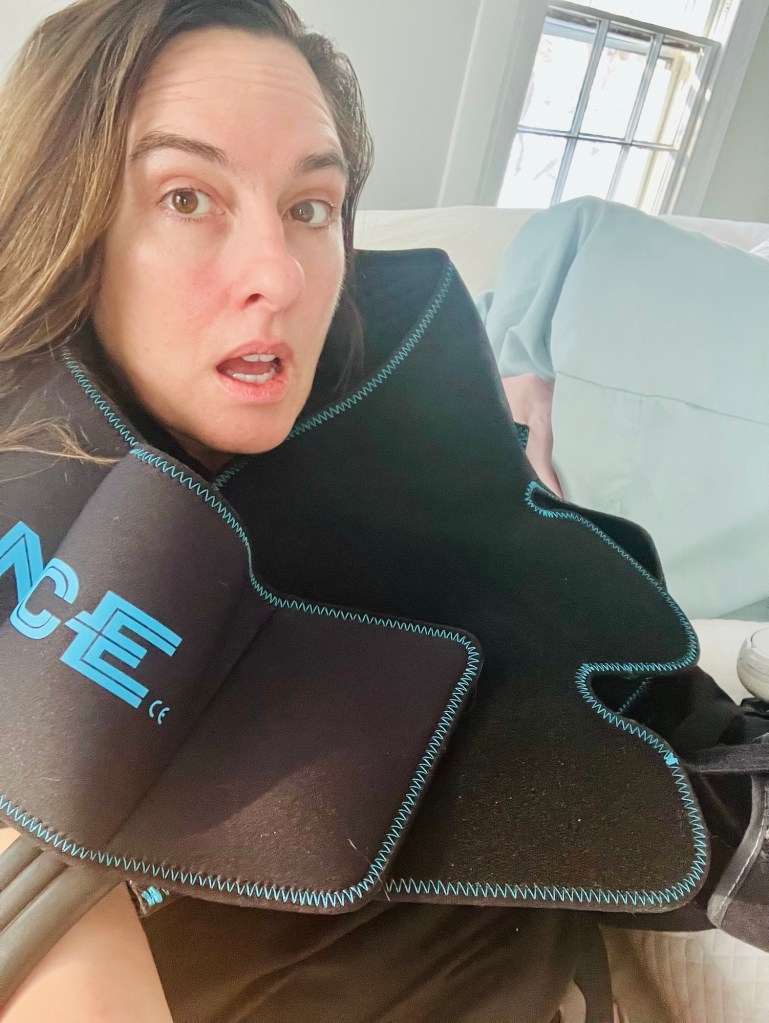
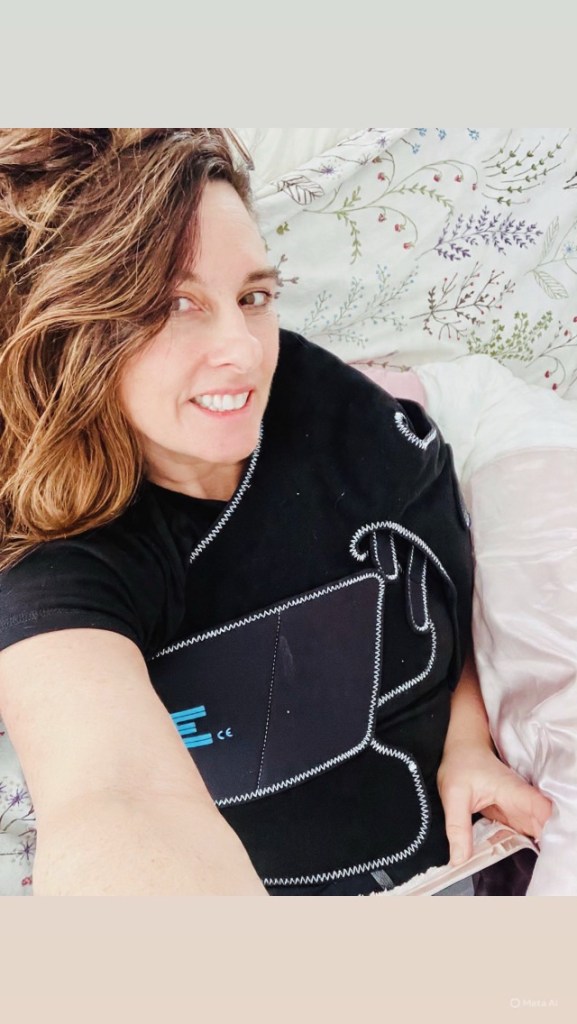
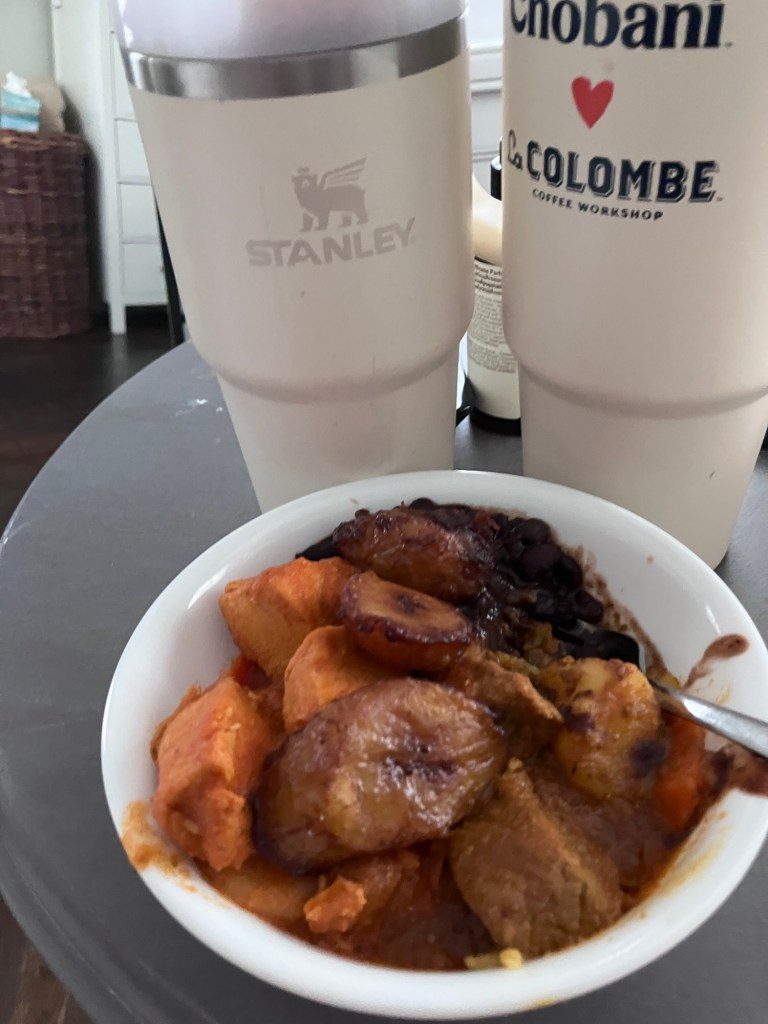
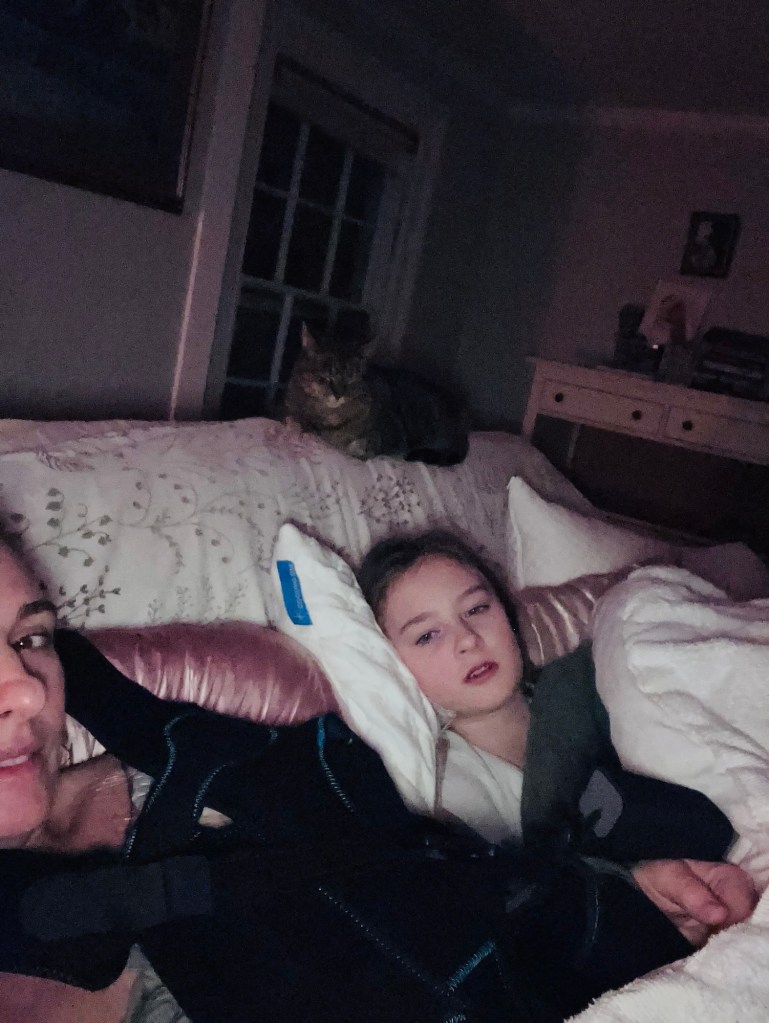
Snuggles from my baby. Took her a few days to adjust 🥹👶
 Live Life Free